How It Works

How a weekend course works

Every course is two days, Saturday and Sunday. Day one is about the film, the prep and your first panels. Day two is the hard panels, fixing problems, specialty work and pricing, then you leave with a certificate and a tool kit.

Below is how a Color Change Wrap Fundamentals weekend runs. Window tint, PPF and ceramic coating follow the same rhythm with their own skills in each slot.
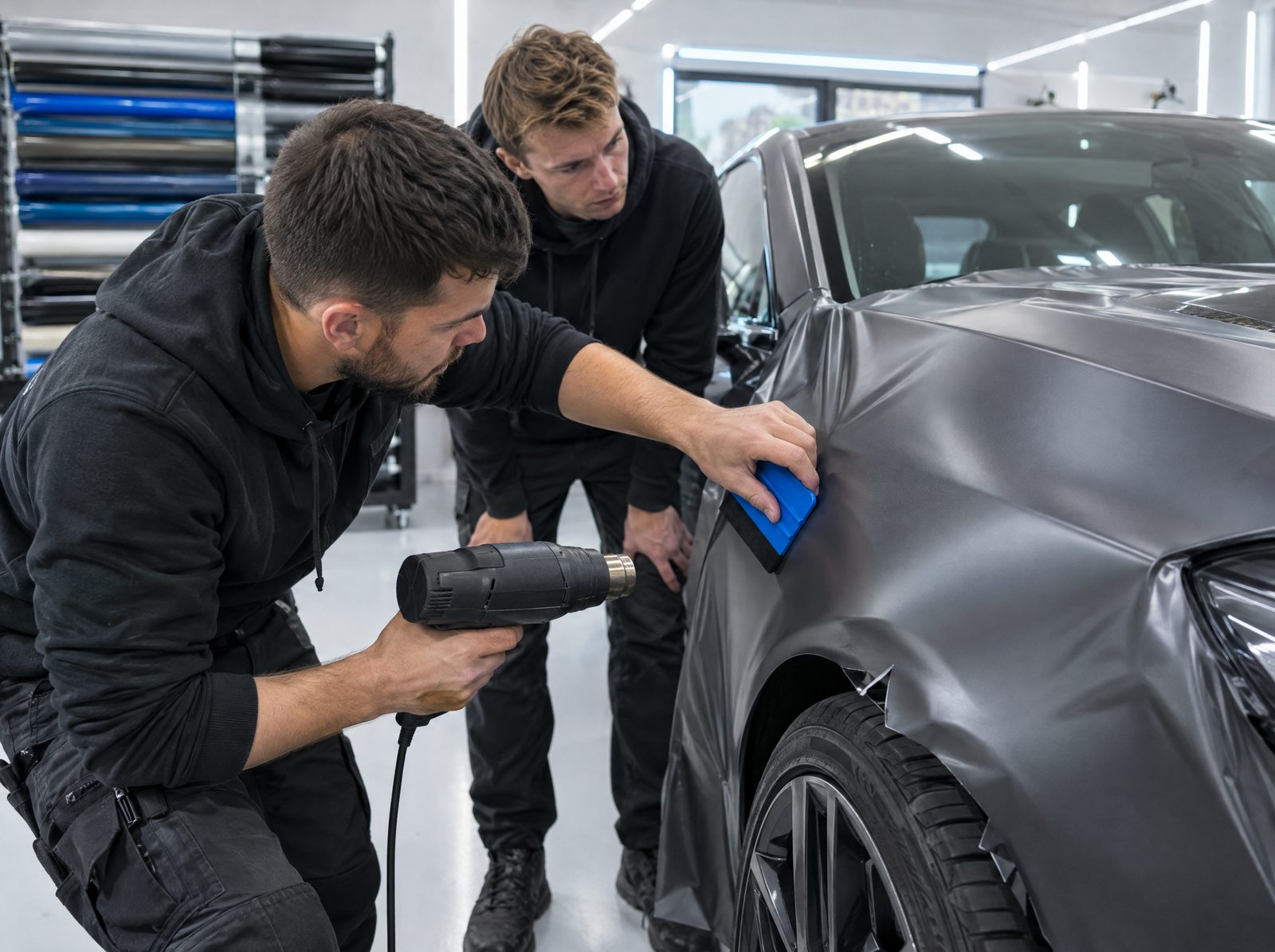
Wrap student using a squeegee and heat gun to lay satin grey film on a fender

Day 1Saturday

Know the film, prep the car, start wrapping

You start with the materials and tools you will use all weekend, then take a car from inspection to its first finished panels.
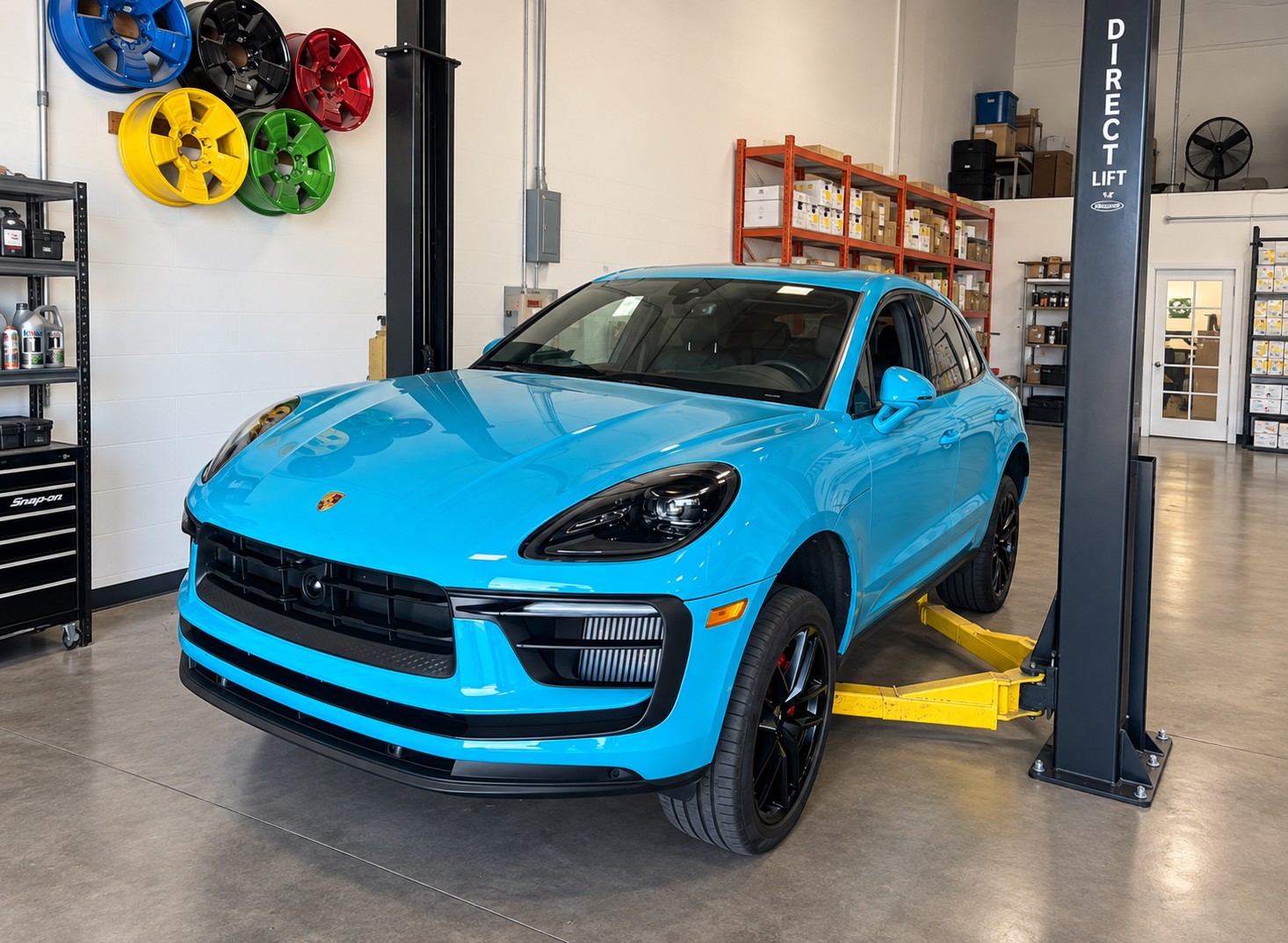
Porsche Macan in a color change wrap inside the Anocote wrap bay
01Tools and materialsThe films, squeegees, blades, heat guns and tapes on the bench, what each one is for, and how to use them without marking a customer's paint.
02Inspect the vehicleRead the car before you touch it: paint condition, chips, previous repairs and trim. You also learn to spot add-on work worth quoting, so the job is complete and the ticket is worth it.
03Prep for filmStrip surface contamination, clean the gaps, grooves and seals, and remove the hardware that needs to come off so the film has something clean to grab.
04Lay out and trimPosition the film around the car, test the fit and tape it in place with a hinge. Then cut around doors, handles, lights and mirrors, with relief cuts for rolling into wheel wells.
05Your first panelsHood and flat panels first: squeegee angle and pressure, when heat helps and when it hurts, then tucking and trimming around contours and corners.

Day 2Sunday

Finish the car, fix problems, price the work

Day two is the work that separates a clean wrap from a callback, then the business side, so you know what to charge when you take your first job.
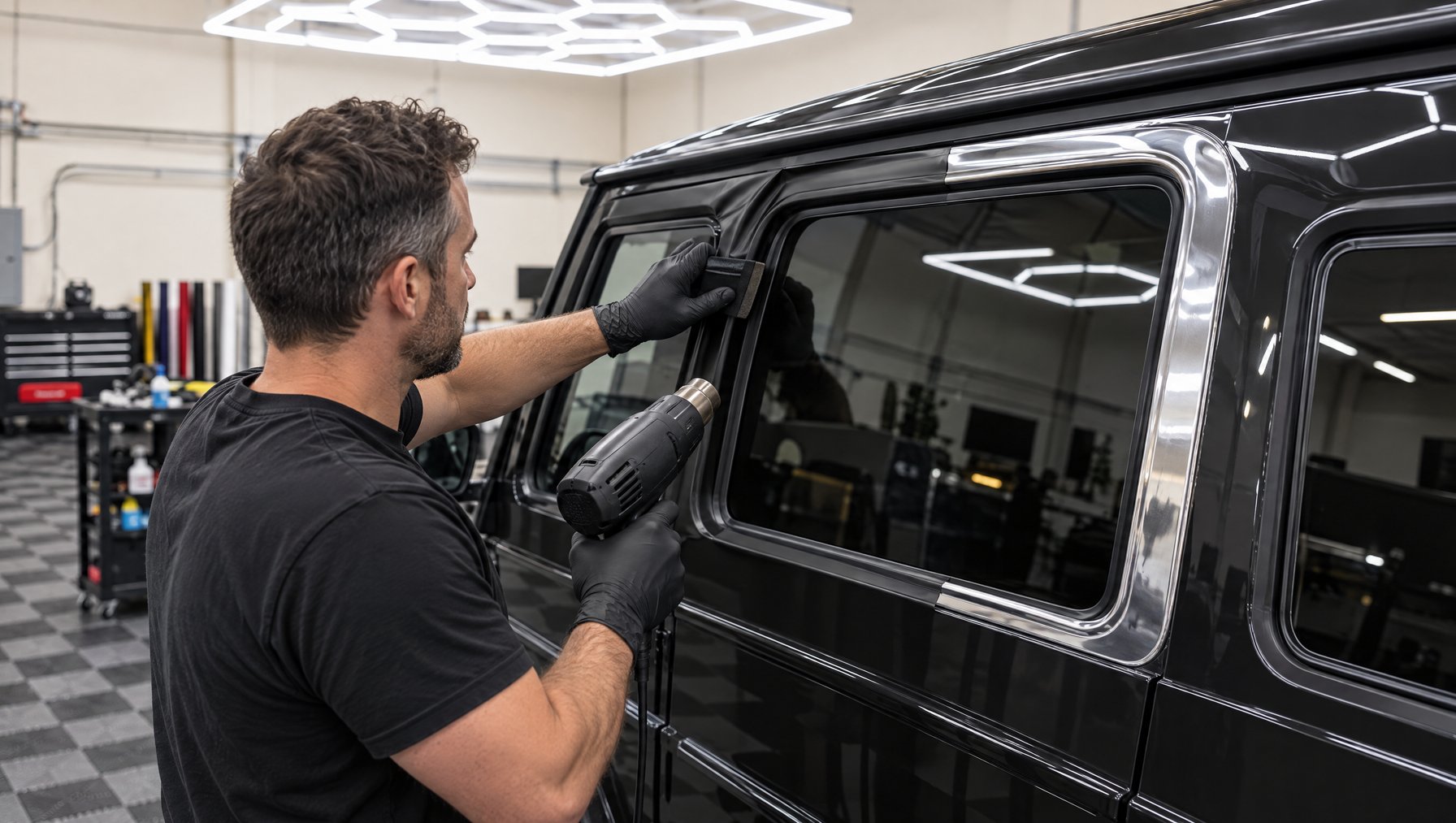
Installer doing a chrome delete wrap on SUV window trim
01Bumpers and doorsPrefill and inlay bumpers properly, then work doors with handles and body lines that fight the film. Your trainer and the group finish the car together.
02Bubbles, wrinkles and seamsWhat causes them, how to stop them as you go, how to fix them when they show up, and how to place a seam so nobody notices it.
03Chrome delete and stripesTwo of the jobs customers ask for most: blacking out chrome trim and laying racing stripes with knifeless tape, no blade on the paint.
04AftercareHow a wrap should be washed and looked after, and what to tell a customer at pickup so it lasts.
05Pricing for profitBuild a quote from film cost, labor time and disassembly, so every job you take on actually pays.
06Review and certificateGo over the car and your work with the trainer, then leave with your certificate of completion and your tool kit.

From booking to your first job

Four steps, the same for every course.

01

Pick a course

Choose a trade and level, or call and ask which one fits where you are starting from.

02

Hold your seat

Send the form or call. We confirm the next weekend dates and answer anything before you pay.

03

Train the weekend

Saturday and Sunday on real vehicles, in small groups, with materials and lunch covered.

04

Get support after

For 90 days after class, reach the people who taught you when a real job gets tricky.

Every course includes

Tool kit to keep
All materials
Lunch
Certificate of completion
90 days of support after class

Ready for your weekend?

Tell us which trade you want to learn and where you are starting from. We will confirm the next weekend dates.